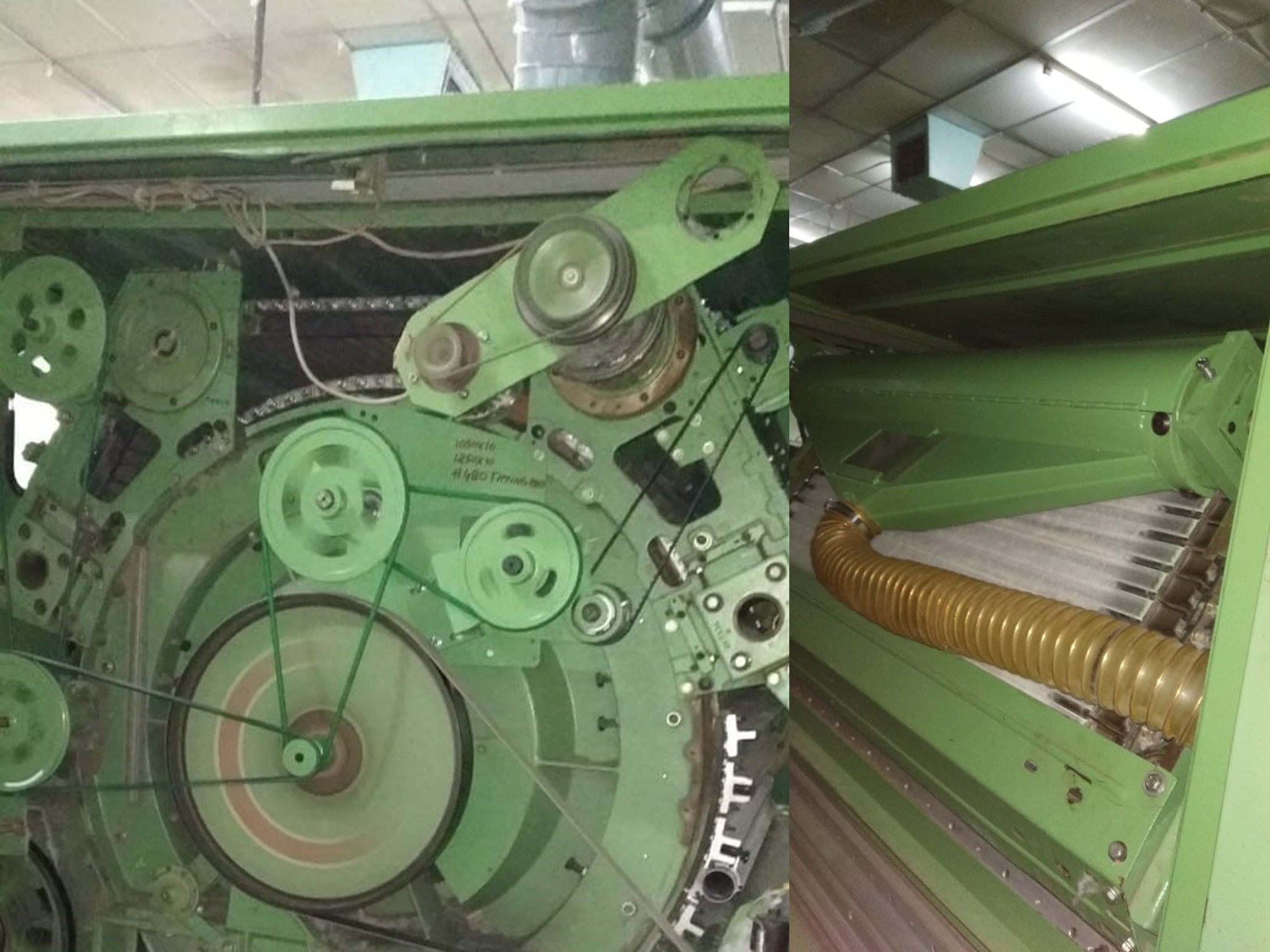
Flat Foundation Cleaning System
Flat tops play a critical role in carding quality, but during normal operation
they are continuously exposed to micro-dust, seed coats, short fibres, husk
particles, and — in synthetic processing — titanium dioxide deposits.
When residue accumulates on the flat foundation, it introduces
secondary problems that are often misdiagnosed: unstable cleaning efficiency,
increased nep generation, inconsistent waste rejection, and higher load on
other carding elements.
Conventional flat cleaning relies on manual stripping or compressed air.
These methods are intermittent, labour-intensive, and inherently inconsistent,
resulting in fluctuating flat cleanliness across the running shift.
System Concept
The Clean Flat Foundation Cleaning System provides
continuous, controlled cleaning of flat foundations
during machine operation, ensuring flats are always presented to the carding
zone in a clean and stable condition.
The system is based on a rotary brush roller assembly designed to operate
without disturbing flat wire points or carding geometry.
Brush Construction
-
Imported natural bristles for effective removal of micro-dust
and fine residue
-
Metallic fillet rows for controlled removal of seed coats,
husk particles, and embedded contaminants
This dual-action cleaning approach allows effective operation across
cotton, polyester, and blended fibre processes, including removal of
titanium dioxide deposits common in synthetic fibres.
Why Continuous Cleaning Matters
- Prevents progressive dust and fibre build-up on flat foundations
- Stabilises waste rejection behaviour over long running periods
- Reduces nep generation caused by contaminated flat surfaces
- Minimises dependence on compressed air and manual stripping
- Reduces stress on flat cleaning components and flat clothing
Execution Philosophy
This system is supplied as a machine-specific conversion,
evaluated against the existing flat arrangement, drive layout, and operating
conditions of the card.
It is executed as a behaviour-stabilising upgrade, not as a
cosmetic attachment. Machine make, model, and observed issues are reviewed
through a technical RFQ to ensure correct integration and long-term reliability.

![Tops Cleaning System with Rotary Brush [TCS]](/media/products/Flat-tops-cleaning-brush.jpg)
![Tops Cleaning System with Rotary Brush [TCS] – RTR C70](/media/products/variant-profiles/WhatsApp_Image_2025-12-26_at_7.43.41_PM.jpeg)
![Tops Cleaning System with Rotary Brush [TCS] – TRUZ TC19i](/media/products/variant-profiles/19i.jpeg)
![Tops Cleaning System with Rotary Brush [TCS] – RTR C50](/media/products/variant-profiles/TCS_C50.jpg)
![Tops Cleaning System with Rotary Brush [TCS] – MRZ C701](/media/products/variant-profiles/M_C701.jpg)
![Tops Cleaning System with Rotary Brush [TCS] – SAU 328A](/media/products/variant-profiles/CFT_JSC_328A.jpg)
![Tops Cleaning System with Rotary Brush [TCS] – SAU JSC 228A](/media/products/variant-profiles/JSC_228A.jpg)
![Tops Cleaning System with Rotary Brush [TCS] – TRUZ TC03](/media/products/variant-profiles/TC03-1.jpg)
![Tops Cleaning System with Rotary Brush [TCS] – TRUZ TC05](/media/products/variant-profiles/TC03_dnevam7.jpg)
![Tops Cleaning System with Rotary Brush [TCS] – TRUZ TC12](/media/products/variant-profiles/TC12WM.jpg)